How OMA works.
Two diagrams, one system. The architecture is the structure — what OMA is. The flow is time — what happens when you call runTeam().
The architecture.
Five layers, top to bottom: the orchestrator; topology, governance, and planning; concurrency plus event scheduling; the agent; and the model loop and tool interfaces. The diagram names the released runtime boundaries rather than a hosted product control plane.
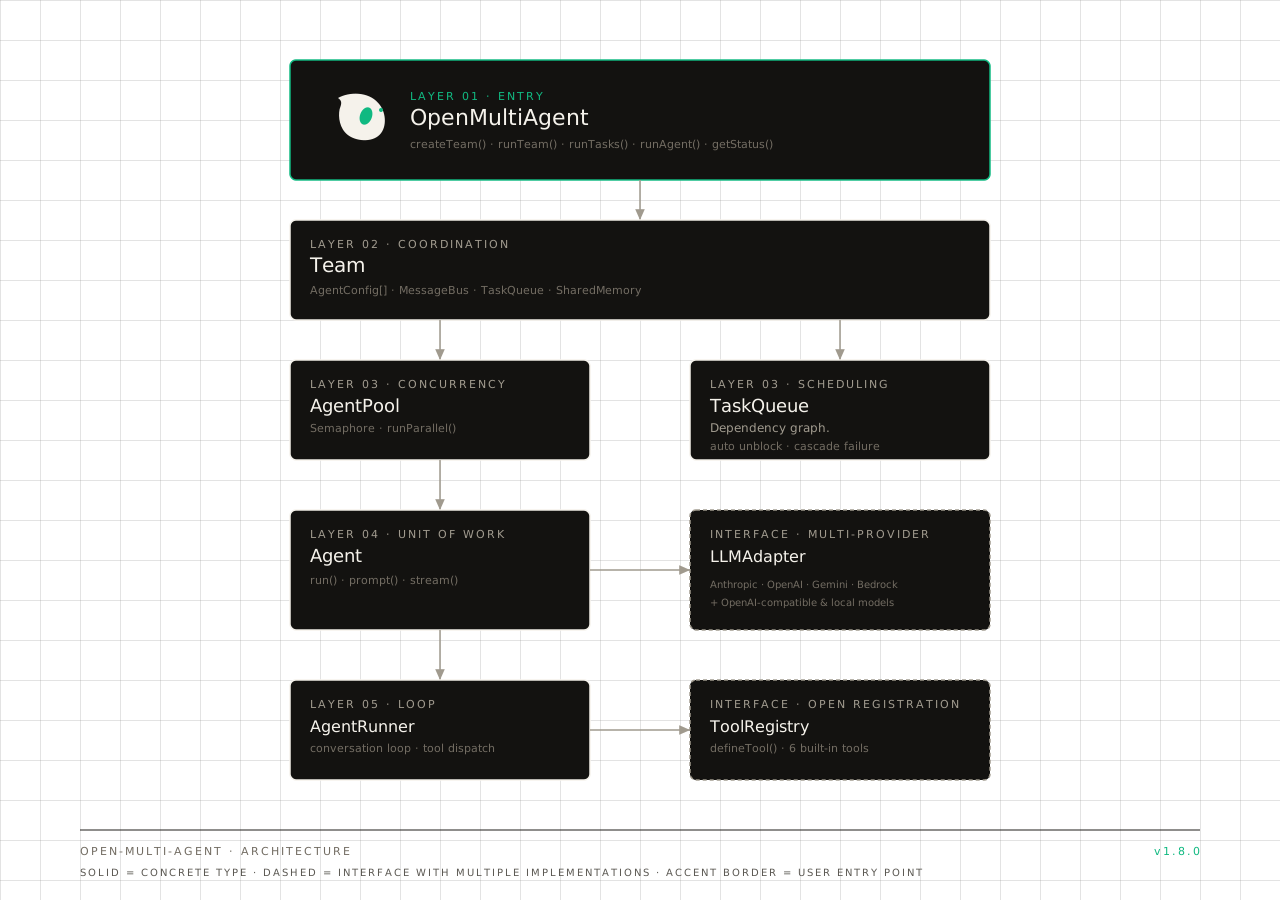
- accent borderUser entry point — the class you instantiate. Exactly one per diagram.
- solidConcrete type — a class with one implementation: Team, AgentPool, TaskQueue, Agent, AgentRunner.
- dashedInterface with multiple implementations — LLMAdapter providers, ToolRegistry tools.
- arrowOwns / contains — the source instantiates or owns the target. Read top-down.
The run is a chain of explicit boundaries.
The runtime separates topology, dispatch, policy, and proof, so an application can control each one without taking ownership of the whole runtime.
Choose single or team
Use an explicit mode, declared governance, or a custom ExecutionRouter.
→scheduleDispatch ready work
The event-driven scheduler releases one eligible task at a time as dependencies complete.
→governGate plans and actions
Approve a plan, each task dispatch, or one consequential tool invocation.
→evidenceInspect what ran
Task results, routing decisions, traces, receipts, and governance conclusions close the loop.
→One runTeam() call.
Goal in, result plus receipt out. The runtime chooses the topology, creates or accepts a task DAG, dispatches ready work as dependencies complete, and preserves task-level evidence. Read it left to right — the horizontal axis is time.

- vertical = which agentEach agent gets its own horizontal track, like a voice in a music score.
- horizontal = whenTracks aligned at the same x run at the same logical time; a track that ends earlier finished first.
- reviewer waitsThe reviewer is offset right — a TaskQueue dependency on the architect and the two developers.
- message busThe dashed-emerald band is the channel any agent can publish to and subscribe from during execution.
Taking this to production?
open-multi-agent is MIT-licensed and free to run yourself. When you need it delivered, integrated, or supported on a deadline, 元定义科技 (YuanASI) offers commercial delivery and support.